How Much Does a No Code WhatsApp Chatbot Builder Cost in 2026
Most businesses overpay for WhatsApp chatbots because they never see the full cost breakdown. In 2026, subscription tiers, add-ons, and Meta's per-conversation fees decide your real monthly spend. Getting this wrong means either burning budget on unused features or hitting limits mid-campaign.
This article breaks down what a no code WhatsApp chatbot builder actually costs in 2026, from plan structures to hidden fees. You will see Com.bot's Silver, Gold, and Platinum pricing, what each tier includes, and which plan fits your volume. By the end, you can compare total cost of ownership and pick a plan with confidence.
What Is Com.bot? A No Code WhatsApp Chatbot Builder Explained
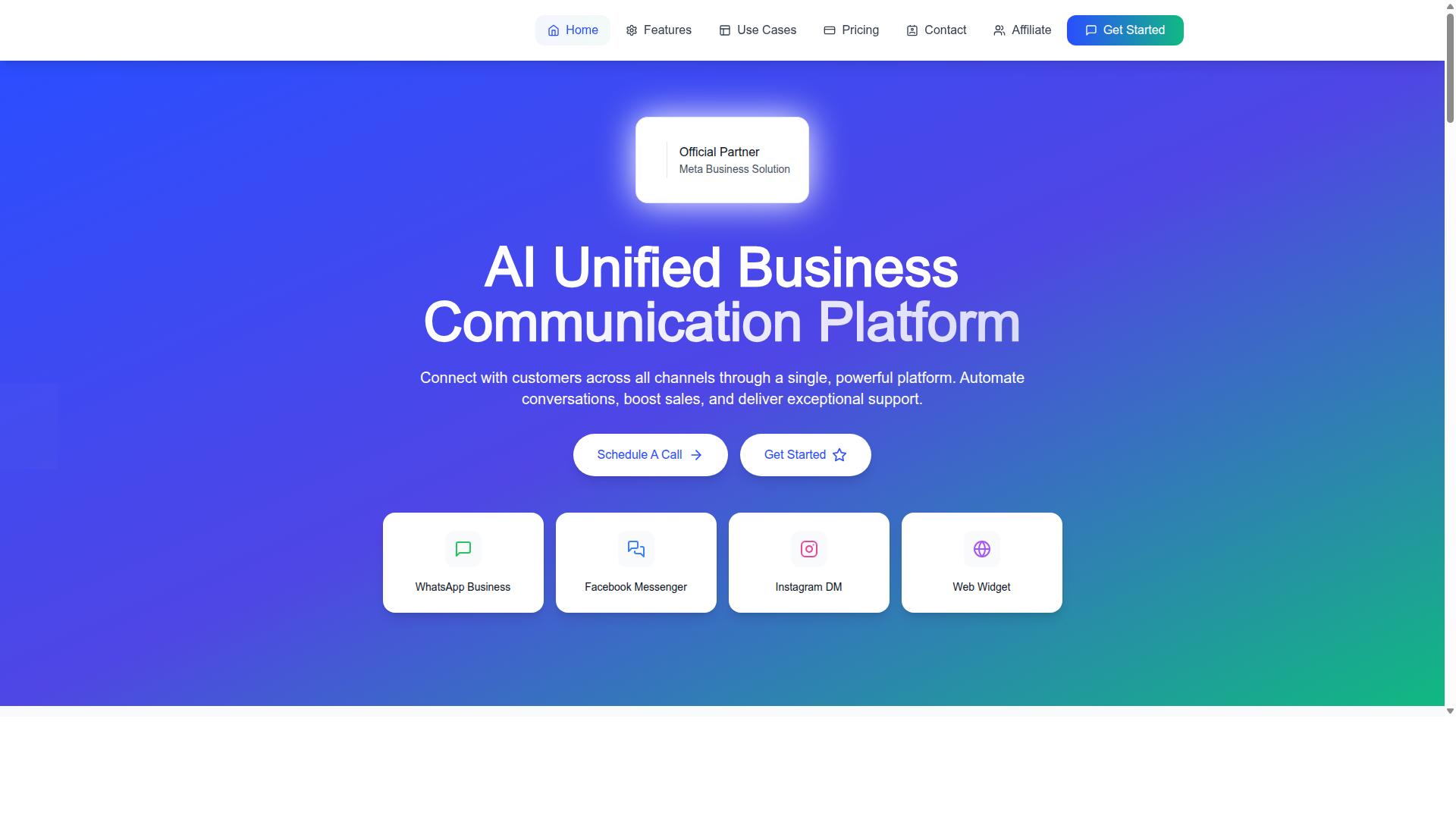
Com.bot is an AI-powered unified business communication platform that enables businesses to build, deploy, and manage WhatsApp chatbots without writing a single line of code. For anyone weighing the cost of a no code WhatsApp chatbot builder in 2026, understanding what the platform actually delivers is the first step toward judging whether the price makes sense.
Com.bot connects customers across WhatsApp Business, Facebook Messenger, Instagram DM, and Web Widget through a single platform. Instead of juggling separate tools for each channel, teams manage every conversation from one place, which is a major reason omnichannel chatbot platforms command different pricing tiers than single-channel tools.
The platform is built around a drag-and-drop visual flow builder paired with AI capabilities, so chatbots can manage automation, customer support, and sales without developer involvement.
Com.bot is also an Official Meta Business Partner with direct WhatsApp Business API integration. That status matters for pricing conversations because it means the platform connects directly to Meta's infrastructure rather than routing through a reseller layer. Com.bot processes over 25 million messages per day, a scale that speaks to reliability for businesses planning high-volume messaging.
Com.bot is owned and managed by Com Bot AI Limited. For buyers comparing subscription plans, annual billing, or usage-based pricing models in 2026, knowing the builder is no code and officially integrated with Meta removes two of the biggest cost variables: custom development and third-party API workarounds.
Who Com.bot Serves and Where It Operates
Com.bot caters to a diverse range of businesses, from small enterprises to large government bodies, seeking to automate and scale their customer communication across multiple channels. That breadth matters when evaluating pricing, since platforms serving both ends of the market tend to offer tiered subscription plans rather than a single flat monthly fee.
The platform serves over 23,000 active customers, including 100+ government bodies and 500+ global partners. Government and enterprise buyers typically need multi-channel customer support, bulk messaging, order updates, and payment collection, all of which fall within Com.bot's stated scope.
For small and mid-sized businesses, the same platform supports automation and sales boosting without a dedicated development team. A single no code WhatsApp chatbot builder covering these use cases can replace several point solutions, which directly affects the total cost of ownership in 2026.
Com.bot is available worldwide, serving 50+ countries, and supports multiple channels. Global availability means pricing considerations extend beyond the monthly fee to include regional messaging rates set by Meta, so buyers in different markets may see different effective costs even on identical plans.
Businesses evaluating a chatbot platform should match their profile against these groups. If you handle high conversation volumes, need omnichannel coverage, or operate in the public sector, Com.bot's customer base suggests the platform is built for exactly that mix of requirements.
How Much Does a No Code WhatsApp Chatbot Builder Cost in 2026?
In 2026, the cost of a no code WhatsApp chatbot builder varies widely based on features, message volume, and support levels, with most platforms offering tiered subscription plans.
Entry-level plans tend to sit in a low monthly band suited to small teams testing automation for the first time. Mid-tier plans, which usually unlock more contacts, more team seats, and deeper integrations, land in a moderate monthly range. Enterprise agreements are quoted individually and scale with volume, compliance needs, and service commitments.
Beyond the subscription itself, budget for two other layers. First, the conversation fees Meta charges for the WhatsApp Business API. Second, any add-ons such as extra channels, additional agents, or advanced automation modules.
Several factors push pricing up or down:
- Number of channels connected to the same workspace
- Automation complexity, from simple menus to AI chatbot flows with intent recognition
- Contact or conversation volume included in the plan
- Support level, from community help to dedicated onboarding
- Billing cycle, since annual billing often lowers the effective monthly fee
Free tiers and freemium plans are common entry points, letting businesses trial a drag-and-drop builder before committing. Paid tiers typically start low and climb steadily toward enterprise pricing. The practical takeaway: compare total monthly outlay, not the headline plan price, before deciding.
Typical Cost Factors: Plans, Add-Ons and WhatsApp Conversation Fees
When budgeting for a no code WhatsApp chatbot builder, you must consider subscription tiers, add-on features, and the per-conversation fees charged by WhatsApp itself.
Platform subscription fees form the base cost. Most vendors bill monthly, quarterly, or annually, with annual billing usually offering a discount. Plans are commonly structured around contacts, active conversations, or agent seats.
WhatsApp conversation fees are separate and set by Meta. Pricing varies by conversation category, such as marketing, utility, authentication, and service, and also by country. Some business solution providers (BSPs) pass these fees through at cost. Others apply a markup, which can quietly raise your effective per-message pricing.
Add-ons are the third layer. Watch for charges tied to:
- Extra team members or agent seats
- Additional social channels beyond WhatsApp
- External actions such as CRM integration or ecommerce hooks
- Higher message limits or overage charges
- Support beyond included hours
Hidden fees deserve particular attention. Overage charges for exceeding a message cap, per-contact pricing that kicks in above a threshold, and paid onboarding or setup fees can all shift the real cost. A short checklist helps:
- Confirm what the plan includes: contacts, conversations, seats, channels
- Ask whether WhatsApp conversation fees are passed through or marked up
- Identify overage rates before you exceed any limit
- Check whether setup, migration, or onboarding costs extra
- Compare the annual billing price against monthly
Adding these together gives a clearer total cost of ownership than the subscription price alone suggests.
Com.bot Pricing Breakdown: Silver, Gold and Platinum Plans
Com.bot offers three straightforward quarterly subscription plans-Silver, Gold, and Platinum-each designed to match different business sizes and communication needs. Rather than juggling several monthly subscriptions, teams pay once per quarter, which keeps budgeting predictable across a full business cycle.
The entry point is the Silver Plan at $149 per quarter. It suits smaller teams or businesses launching their first no code WhatsApp chatbot builder and testing how automated conversations fit into their sales or support process.
The Gold Plan at $349 per quarter is the recommended option. It sits in the middle of the range and tends to fit growing businesses that need more capacity than Silver allows but are not yet operating at enterprise scale.
At the top sits the Platinum V1 at $2500 per quarter, built for organizations with heavy messaging volumes, larger teams, and more complex automation requirements. All three tiers share the same foundation: a visual bot builder, multi-channel support, and a unified team inbox, so the core experience stays consistent no matter which plan you choose. The differences show up in limits, capacity, and advanced capabilities, which the following sections break down in detail.
Add-Ons, Dedicated Support Rates and What's Included
Beyond the base subscription, Com.bot offers add-ons such as additional team members, social channels, and external actions, each priced at $10 per month per unit. External actions are billed per 5,000, so heavier automation users can scale usage without jumping to a higher plan.
Other add-ons follow the same logic. Bot triggers are available at $10 per month per 25,000, and an ecom store add-on is also offered. This pay-as-you-go structure means you only pay for the capacity you actually need.
Every plan includes core features such as the visual bot builder and WhatsApp Business API integration, along with multi-channel support and a unified team inbox. Higher tiers simply raise the limits on team members, channels, and message volume while unlocking more advanced capabilities.
Dedicated support is available at an extra cost when you need hands-on help:
- WABA, CRM, and Inbox support: $49 per hour
- Ecommerce, Bots, and Automations support: $99 per hour
For anything outside these standard rates, such as custom requirements or unusual volumes, it is worth contacting sales directly for a tailored quote. One detail that keeps costs transparent: WhatsApp messaging is charged at actual Meta rates with no markup, so you are not paying a hidden premium on top of Meta's own fees.
Key Features That Affect the Price You Pay
The features you need, such as visual bot building, automation, and native payments, directly influence the cost of your no code WhatsApp chatbot builder. A basic plan may only cover simple menu-based replies, while higher tiers unlock the tools that make a bot genuinely useful.
Advanced capabilities are the main reason a monthly fee rises. For example, AI chatbot features require more computing power and development work than static keyword matching.
Platforms that charge more typically offer more sophisticated automation, higher message limits, and better support. In practice, these three factors are closely linked. More automation means more conversations handled without a human, higher limits mean more customers served, and stronger support means fewer disruptions.
Other features that move the price include:
- Native payment processing inside WhatsApp, which removes the need for a separate checkout step
- CRM integration and ecommerce integrations that sync customer data automatically
- Omnichannel support across several messaging apps from one place
- Per-agent or per-contact pricing models that scale with your team or audience
Watch for hidden fees too. Setup fees, onboarding costs, and overage charges for messages beyond your plan limit can change the real total. The WhatsApp Business API itself, delivered through Meta or a BSP, may also carry conversation-based charges separate from the chatbot platform's subscription.
The practical advice is simple: match features to your actual business requirements. A small support team may only need a drag-and-drop builder and a shared inbox. A retail brand selling through chat will get far more value from native payments and ecommerce integrations. Paying for automation you never use is the most common way businesses overpay in 2026.
Visual Bot Builder, Automation Builder and Native Payments
Com.bot's visual bot builder lets you design conversation flows with a drag-and-drop interface, while its automation builder and native payments streamline transactions directly within WhatsApp. These are core parts of the platform's subscription, not add-ons.
The Visual Bot Builder uses a drag-and-drop interface, so building a conversation flow does not require a developer. That directly reduces development costs and shortens time-to-market, since changes can be made without writing code or waiting on an engineering team.
The Automation Builder connects to 1000+ integrations, letting you build workflows that link your chatbot to the other systems your business already runs on. This is where a no code WhatsApp chatbot builder earns its keep: repetitive tasks move off your team's plate and into automated flows.
Native Payments let customers complete transactions without leaving WhatsApp. For any business that sells through chat, keeping the payment step inside the conversation removes friction and cuts the number of drop-offs between interest and purchase.
Com.bot also brings several capabilities together under one subscription:
- Multi-Channel Support for WhatsApp, Facebook, and Instagram from a unified inbox
- Unified Team Inbox with team collaboration and role-based access
- Bulk Messaging, order updates, notifications, and customer support flows
- Smart Chatbots and payment collection built on WhatsApp Business API integration
Because these features sit inside the plan rather than behind separate purchases, the effective value of the subscription is higher than the headline price suggests. A unified inbox means one team handles WhatsApp, Facebook, and Instagram without switching tools. Role-based access keeps larger teams organized. For businesses comparing chatbot platform costs in 2026, the deciding question is not just what the monthly fee is, but how much of your operation the platform can absorb. Com.bot's answer is a broad one: bot building, automation, payments, and multi-channel messaging in a single place.
Why Com.bot Offers Strong Value at Every Price Point
Com.bot delivers exceptional value by eliminating markups on WhatsApp conversation fees and offering a quick, self-service setup that reduces onboarding costs. As an official Meta Business Partner, Com.bot gives businesses a direct line to the WhatsApp Business API without the inflated pricing layers that some providers add.
That distinction matters more than most buyers realize. When comparing a no code WhatsApp chatbot builder's pricing in 2026, the subscription fee is only part of the total cost. Conversation charges often make up the larger share for active businesses, so how a platform handles Meta's fees can matter as much as the monthly fee itself.
Com.bot's track record supports its value claims. The platform serves 23,000+ active customers, processes 25M+ messages per day, and counts 100+ government bodies and 500+ global partners among its users. Organizations of that scale tend to scrutinize pricing closely, and they stay because the cost structure holds up.
Value at every price point also means no surprises. Core capabilities come with the subscription, and any add-ons are priced transparently. For a buyer weighing subscription plans, annual billing, or usage-based pricing, that clarity makes the total cost of ownership easier to predict.
No Markup on WhatsApp Conversations and Quick Setup
Unlike many BSPs, Com.bot passes through WhatsApp conversation fees without any markup, and its drag-and-drop builder enables a quick setup. You connect your own WhatsApp Business API account, or use Com.bot's BSP services, and pay Meta's rates directly.
This pass-through model is where the real savings live. Per-conversation pricing and per-message pricing are set by Meta, not by Com.bot. A business solution provider that adds its own margin on top inflates every conversation, and for high-volume messaging the gap compounds quickly. Paying Meta directly keeps per-conversation costs predictable as volume grows.
The setup side is just as lean. There is no coding, no developer dependency, and no professional services invoice. The process looks like this:
- Sign up and choose a subscription plan
- Build in the visual flow builder
- Connect your channels and go live
Because the builder is visual, teams can design conversation flows, automation, and AI chatbot behavior without writing code. CRM integration and ecommerce integration connect the bot to existing systems. Setup that once required a development sprint now happens in a single working session.
Fewer dependencies mean faster time to value. Avoiding onboarding cost and setup fee line items improves the payback period on the subscription itself, which is why the platform's no-markup policy and quick setup work together. For a business evaluating a no code WhatsApp chatbot builder in 2026, that combination is the clearest signal of genuine value: transparent fees, direct Meta pricing, and a quick path to launch. Com.bot's 100K+ bots created show how many teams have already taken that path.
Trust Signals: Scale, Security and Track Record
Com.bot's credibility is backed by its status as an official Meta Business Partner, processing over 25 million messages daily for more than 23,000 active customers worldwide. For a buyer weighing the monthly fee of a no code WhatsApp chatbot builder, that scale matters. It signals a platform that has already handled the volume and variety of real business traffic, not a newcomer still proving it can stay online during peak hours.
Trust in this category rarely comes from a single claim. It comes from a pattern of adoption across very different types of organizations, from small teams to public institutions running critical citizen communication. The numbers below show how broadly Com.bot has been adopted.
- 23,000+ active customers relying on the platform today
- 100+ government bodies using Com.bot for official messaging
- 500+ global partners building and reselling on the platform
- 25 million+ messages processed per day
- 100,000+ bots created since launch
The presence of more than 100 government bodies is a particularly strong signal. Public sector buyers typically face stricter procurement, security, and compliance reviews than private companies. When that many have cleared those hurdles, it tells a prospective customer that the platform can meet demanding standards.
Scale also has a direct link to pricing predictability. A platform processing tens of millions of messages daily has the infrastructure depth to absorb traffic spikes without forcing customers into emergency upgrades. For anyone comparing subscription plans or usage-based pricing in 2026, that stability is part of the real cost calculation.
Security is the other half of the trust equation. Com.bot provides enterprise-grade security with end-to-end encryption, and it operates in line with data protection regulations. Because the platform works through the official WhatsApp Business API, businesses are not relying on unofficial workarounds that risk account bans or data exposure.
Track record ties these threads together. More than 100,000 bots created means the drag-and-drop builder, visual flow builder, and template library have been tested across countless conversation flows, from simple FAQs to complex automation with CRM integration. That volume of real-world use is difficult to fake and hard to replicate quickly.
For a buyer asking whether a no code WhatsApp chatbot builder is worth its monthly fee, the answer here is clear. Com.bot combines official Meta status, verified scale, government-level scrutiny, and enterprise security. That combination supports a confident verdict: this is a legitimate, established platform, and its pricing reflects infrastructure and compliance that hold up under real business demands.
Who Should Use Com.bot - and Which Plan Fits
Com.bot is ideal for businesses of all sizes, from startups to enterprises, that need to automate customer communication across WhatsApp, Facebook, and Instagram. The platform serves teams that want a no code WhatsApp chatbot builder without hiring developers or managing complex infrastructure.
Because Com.bot runs on the WhatsApp Business API through Meta, it suits organizations that care about compliance and deliverability. Messaging is billed at actual Meta rates with no markup, so you pay the platform subscription plus what Meta charges, nothing more.
Choosing the right plan comes down to three practical questions. Answer these before you commit to a tier:
- How many conversations do you handle each month?
- How many agents or team members need access?
- Which channels and integrations does your workflow require?
With those answers in hand, the plan comparison below becomes straightforward.
The Silver Plan at $149 per quarter fits small businesses and teams just getting started. It covers the essential features needed to launch a first chatbot and test WhatsApp automation with real customers. If you are validating demand or running a lean operation, this is the natural entry point.
The Gold Plan at $349 per quarter is the recommended choice for growing businesses. It suits teams with higher message volumes and multiple team members working the same inbox. When several agents share conversations and you need more room to scale, Gold is the sensible step up.
The Platinum V1 at $2500 per quarter targets large enterprises and government bodies. It is built for complex requirements and high volumes, where the scope of automation, channels, and oversight goes well beyond a standard small business setup.
Every plan can be extended with add-ons at $10 per month each. These cover an additional team member, a social channel, external actions per 5000, bot triggers per 25000, and an ecom store. Add-ons let you customize any tier rather than jumping to the next plan prematurely.
If you need hands-on help, dedicated support is available separately. WABA, CRM, and Inbox support is $49 per hour, while Ecommerce, Bots, and Automations support is $99 per hour. Pricing is listed in USD, and the site offers an INR toggle, so verify your billing currency before purchase.
Start by matching your monthly conversation volume, agent count, and required channels to a tier. Then add only the add-ons you actually need. That approach keeps your cost predictable while leaving room to grow into a higher plan later.
Final Verdict: Is Com.bot Worth the Cost in 2026?
In 2026, Com.bot stands out as a cost-effective no code WhatsApp chatbot builder, offering transparent pricing, no markup on conversation fees, and a robust feature set that delivers strong ROI.
The pricing model itself is the strongest argument in Com.bot's favor. Quarterly subscription plans start at $149, and that figure is not padded with setup fees, onboarding charges, or hidden add-ons. Many chatbot platforms advertise a low entry price, then recover the difference through per-message markups or surprise overage charges once a business starts scaling.
Com.bot takes a different approach. There is no markup on WhatsApp conversation fees, which means the platform does not profit from inflating the underlying Meta charges that every business must pay to use the WhatsApp Business API. For companies sending high volumes of messages, that single detail can matter more than the subscription price itself.
The feature set reinforces the value equation. A visual flow builder and drag-and-drop interface mean teams can design conversation flows without writing code, and native payments support reduces the need to hire developers or bolt on third-party tools. Those savings in development and maintenance costs are real, even if they never appear on an invoice.
For businesses weighing affordability against capability, the combination is hard to match:
- Quarterly plans starting at $149, with no hidden fees
- No markup on WhatsApp conversation fees
- Visual flow builder that cuts development costs
- Native payments support for transactions inside chat
- Quick setup that shortens time to launch
None of this matters if a platform cannot support growth, and that is where Com.bot's positioning becomes clearer. The same tool that suits a small team launching its first automation can serve an organization handling large conversation volumes, because the underlying WhatsApp Business API infrastructure scales with demand.
That blend of affordability and enterprise-grade capability is what makes the cost question answerable. A cheap tool that breaks under load is expensive in the long run. A powerful tool with opaque pricing is a budget risk. Com.bot sits in the middle: predictable subscription costs, no fee surprises, and enough functionality to grow into.
The verdict for 2026 is straightforward. If your business is comparing no code WhatsApp chatbot builders on total cost of ownership rather than sticker price alone, Com.bot deserves a serious look. The pricing is clear, the fee structure is honest, and the feature set supports genuine scale.
To evaluate it against your own requirements, reach out to the sales team at [email protected] or visit the Com.bot website to request a demo. Business hours run Monday through Friday, 9:00 AM to 6:00 PM IST, and WhatsApp support is available for questions along the way.
Frequently Asked Questions
How much does Com.bot cost in 2026?
Com.bot offers three plans billed quarterly: Silver at $149 per quarter, Gold at $349 per quarter (recommended), and Platinum V1 at $2500 per quarter. Optional add-ons cost $10 per month each, covering things like an additional team member, an extra social channel, external actions (per 5,000), and bot triggers (per 250). Because your final cost depends on the plan and add-ons you choose, the best next step is to contact Com.bot directly for a quote tailored to your needs.
What affects the price of a no code WhatsApp chatbot builder?
Pricing generally depends on the plan tier you select, how many team members and channels you need, and your usage of features like bot triggers and external actions. With Com.bot, add-ons are charged at $10 per month for items such as an additional team member, social channel, external actions (per 5,000) and bot triggers (per 250), so costs scale with how much you actually use. This means a small business and a large enterprise can end up with very different total costs on the same platform.
Is there a free trial or a cheaper way to start with Com.bot?
The verified Com.bot pricing starts at the Silver Plan at $149 per quarter, and no free trial is listed among the brand facts. If budget is a concern, the Silver Plan is the lowest-cost entry point, and you can add features later as your needs grow. For any current promotions or trial options, contact Com.bot directly via [email protected] or WhatsApp support.
Why do no code chatbot builders charge quarterly instead of monthly?
Quarterly billing is simply the pricing structure Com.bot uses, with Silver at $149, Gold at $349 and Platinum V1 at $2500 per quarter. It gives businesses a predictable cost over a longer period rather than month-to-month fluctuations, while add-ons remain billed at $10 per month. If you prefer a different arrangement, reach out to Com.bot to discuss your options.
What do I actually get for the price with Com.bot?
Every Com.bot plan runs on an AI Unified Business Communication Platform that connects WhatsApp Business, Facebook Messenger, Instagram DM and Web Widget in one place. The platform includes WhatsApp Business API integration, a Unified Team Inbox, a Visual Bot Builder with drag-and-drop interface, an Automation Builder, native payments for WhatsApp transactions, and multi-channel support. Com.bot is also an official Meta Business Partner, serving 23,000+ active customers across 50+ countries.
Are there hidden costs I should watch out for?
With Com.bot, the published costs are the quarterly plan price plus clearly listed add-ons at $10 per month for items like extra team members, social channels, external actions (per 5,000) and bot triggers (per 250). Beyond that, keep in mind that WhatsApp itself may charge conversation or messaging fees separately from your chatbot builder, so it's worth confirming those directly with Meta. For a full breakdown of what applies to your use case, contact Com.bot at [email protected] before you commit.
Recommended Resources: